

With the official AMC10 exam scheduled for November 2026, there are about six months of preparation time left. For many students, the biggest question now is: Is it too late to start preparing and still have a shot at qualifying for AIME? The answer is yes. The core of the AMC10 tests the four major areas of Algebra, Geometry, Number Theory, and Combinatorics, focusing on logical thinking and problem-solving skills, not just in-school knowledge. As long as you find the right direction, half a year is more than enough time to make a qualitative leap.

I. Your Foundation Determines Your Starting Point
The first step in preparation is to objectively assess your own mathematical foundation to formulate a differentiated sprint plan:
Solid Foundation Type (Have experience with Olympiads or have taken AMC8): These students do not need to learn knowledge points from scratch. It is recommended to directly work on 2-3 sets of AMC10 past papers for positioning, accurately identify weak areas, use the 3 months of summer to solidify the foundation, and dedicate the remaining 2 months to connecting knowledge points, correcting difficult problems, and taking full-length mock exams. This is more than enough to sprint for AIME.
Excellent In-School Performance but Zero-Base Type (No exposure to competition system): If your in-school math performance is good but you lack competition logic and knowledge system, it is recommended to first take a professional level test and formulate a scientific preparation plan. Be sure to seize the summer's block of time for intensive learning to quickly build a competition thinking framework.
The two most taboo things in preparation: first, procrastinating and waiting until one or two months before the exam to hastily start; second, blindly tackling difficult problems while neglecting basic consolidation, leading to "losing points on easy questions and not solving difficult ones."
II. Key Summer Preparation Tips for the AMC10
To maximize the use of this six-month golden period, it is recommended to reject "fragmented learning" and steadily advance according to the following three stages:
Stage 1: Build the Knowledge Framework (Early to Mid-July)
Core Task: Systematically organize the four major modules and clear knowledge blind spots.
The knowledge points of the AMC10 are scattered and highly interconnected. Blindly doing practice problems will only lead to losing focus. Before formally tackling practice problems, you must systematically master the core test points: In Algebra, focus on breaking through factorization and Vieta's theorem; In Geometry, master high-frequency models like Stewart's theorem and cyclic quadrilaterals; In Number Theory, thoroughly understand congruence equations and modular arithmetic; In Combinatorics, strengthen inclusion-exclusion principle and recursive counting.
Pitfall Avoidance Guide: Practicing past papers without a solid foundation will only lead to an accumulation of mistakes and severely damage your confidence.
Stage 2: Phased Targeted Breakthrough (Late July - Early August)
Core Task: Focus on conquering "medium-difficulty questions" to improve problem-solving speed and accuracy.
The AMC10 has 25 questions in total. Questions 1-10 are basic questions, 11-20 are medium-difficulty questions, and 21-25 are final challenge questions. The key to winning awards is to steadily secure basic points and strive to conquer questions 11-20. It is recommended to do timed practice of 3-5 algebra or geometry questions daily, alternating number theory and combinatorics, focusing on the medium-difficulty questions from past 5 years' exams, and summarizing problem-solving patterns for high-frequency question types.
Pitfall Avoidance Guide: When your foundation is weak, stubbornly tackling final challenge questions has very low cost-effectiveness. Instead, you might lose precious points on medium-difficulty questions.
Stage 3: Refuse to "Go It Alone" (Throughout the Process)
Core Task: Use professional guidance and peer support to avoid detours.
The competition-oriented knowledge points of the AMC10 are rarely covered in school curricula. Learning purely by yourself can easily lead to deviation or omission of key points. Seeking professional teachers to organize the knowledge system, explain difficult problem-solving techniques, and correct thinking errors is far more efficient than exploring on your own. At the same time, joining small classes to exchange problem-solving ideas with peers and supervise each other's learning can effectively avoid procrastination and maintain your preparation rhythm.
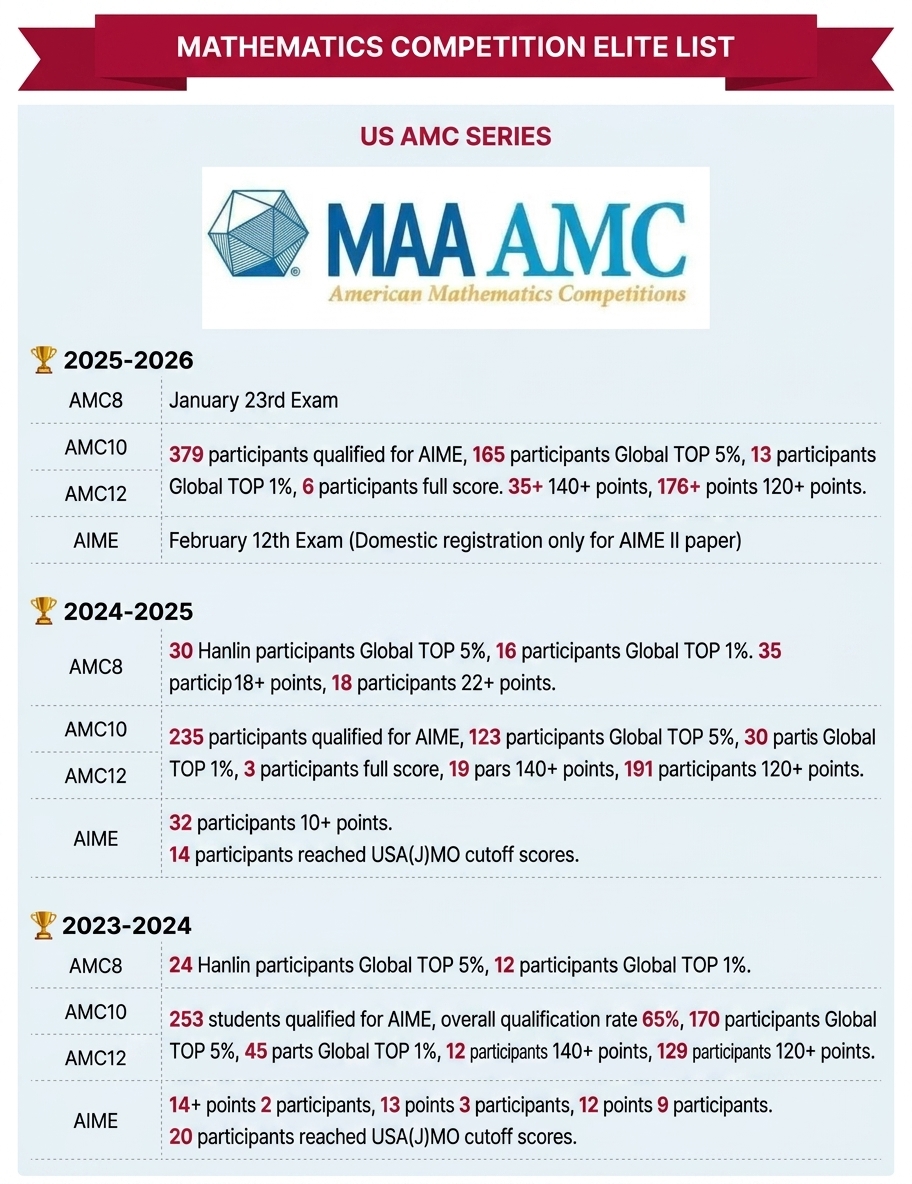
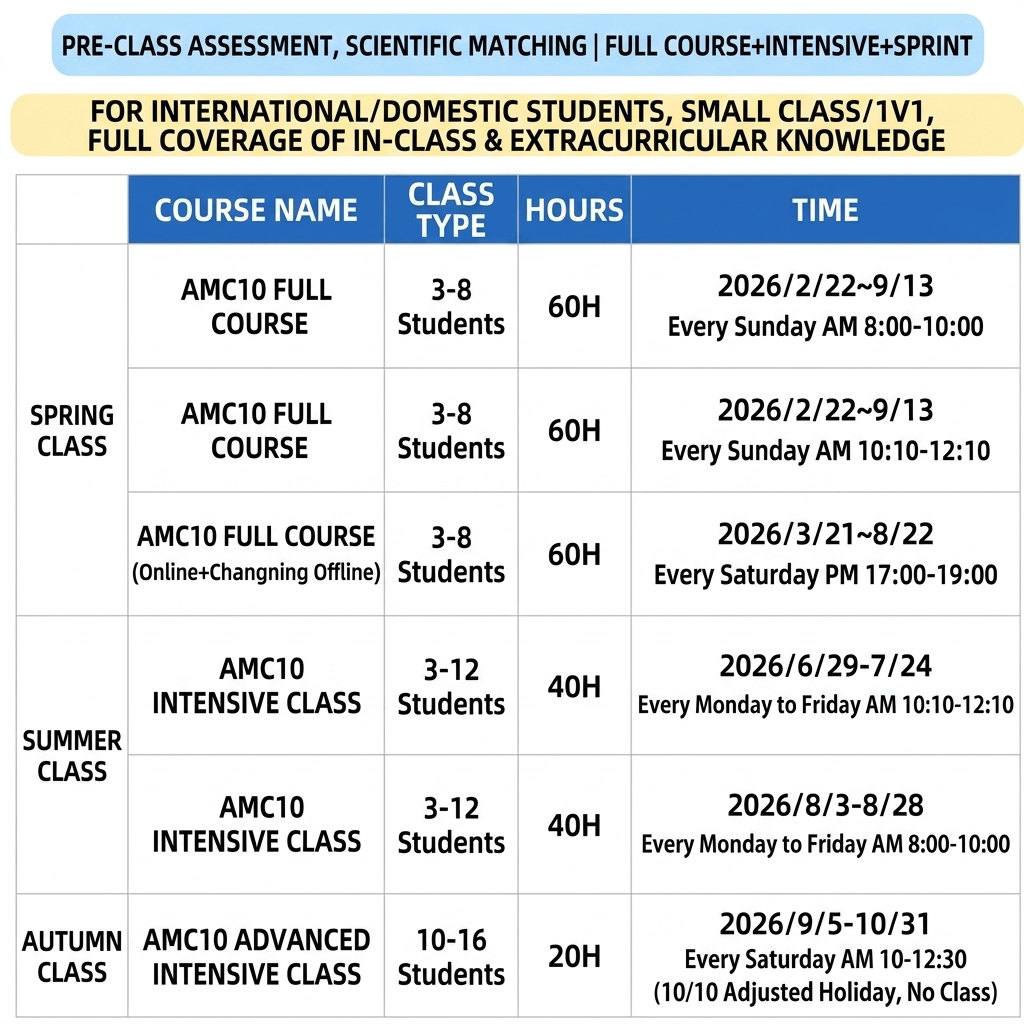
We are an authorized AMC test center and can assist with registration for free!